Circular economy
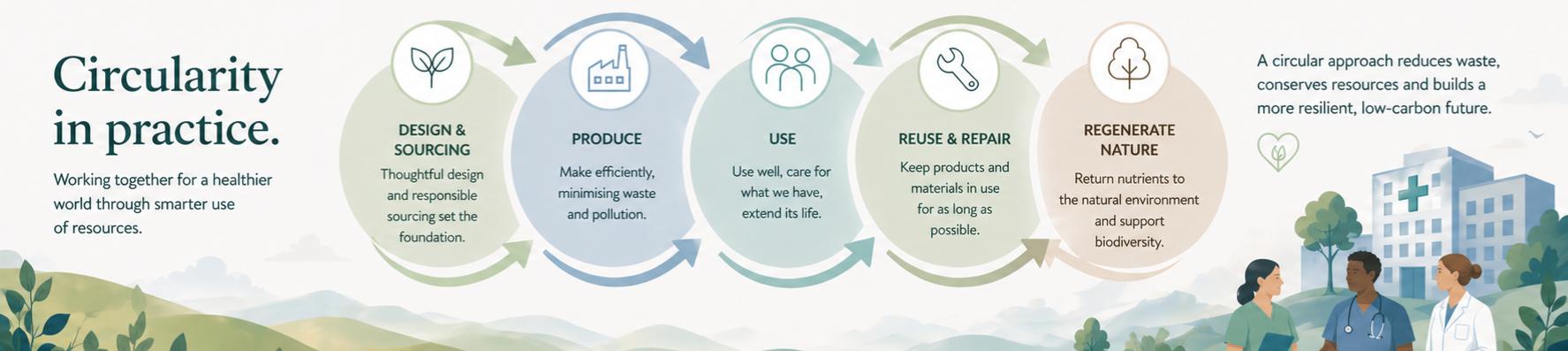
Circularity is an increasingly important idea in how we think about sustainability, but at its heart it is simple: making better use of what we already have. Rather than the traditional “take–make–dispose” approach, a circular economy encourages us to design out waste, keep materials in use for longer, and work in ways that support natural systems rather than deplete them.
This shift is less about radical disruption and more about thoughtful evolution. It invites organisations to look again at how products are designed, how resources flow through systems, and where value may be lost unnecessarily. Often, what is considered waste still holds significant potential—whether through reuse, repair, or repurposing. In this sense, circularity is as much about mindset as it is about process.
Education and awareness play a key role. For many sectors, including healthcare, understanding the link between environmental impact and human wellbeing is becoming essential. Building confidence in these areas helps individuals and organisations make informed, practical decisions that align with both sustainability goals and day-to-day responsibilities. Equally, circularity works best when it is collaborative and accessible. No single organisation can achieve it alone. Progress comes from shared learning, partnerships, and a willingness to rethink established ways of working.
Circular approaches also create positive opportunities—supporting innovation, improving efficiency, and strengthening resilience. Rather than being an added burden, they often reveal smarter ways of working.