How can we decarbonise the value chain fairly and profitably?
Description
RSK has published a new report examining how organisations can accelerate value chain decarbonisation while remaining commercially competitive and creating long-term value.
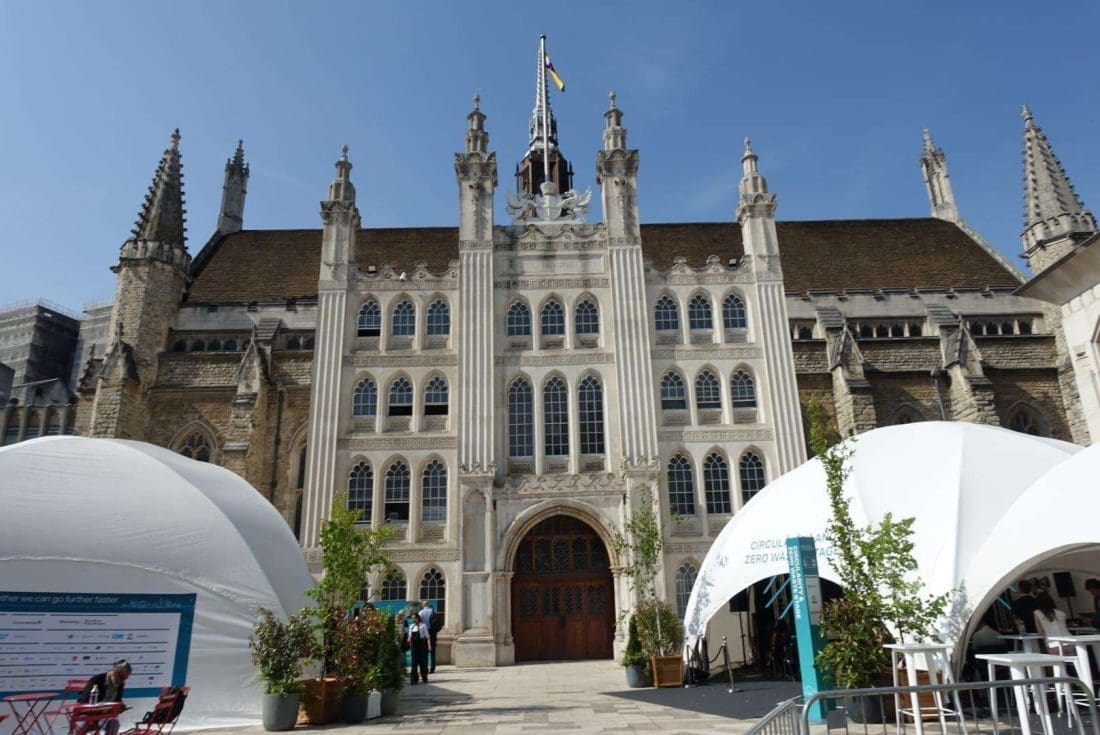
The report, Good business sense: How can we decarbonise the value chain fairly and profitably?, captures insights from a roundtable discussion hosted by RSK during London Climate Action Week.
ADAS Climate & Sustainability Managing Director Sarah Wynn and Copper Consultancy Director of Strategic Development Ronan Cloud – both RSK Group businesses – chaired the discussion. This brought together senior leaders from infrastructure, energy, finance, manufacturing, retail, utilities and professional services and asked them to explore how organisations can decarbonise value chains in ways that are commercially viable, collaborative and capable of delivering lasting impact.
Roundtable highlights value chain decarbonisation challenge
The report notes that the case for decarbonisation is no longer in question for many organisations. Instead, the challenge is how to accelerate progress while remaining commercially competitive, creating long-term value and maintaining fairness across increasingly complex value chains.
It highlights that for most organisations, the majority of emissions sit outside direct operations, making collaboration across suppliers, customers and partners essential for achieving meaningful emissions reductions. Supply chain emissions are, on average, more than 26 times greater than a company’s direct operational emissions, underlining why value chain collaboration is central to net-zero progress.
Sarah said: “The businesses making the greatest progress are those embedding sustainability into core decision-making processes, from investment and procurement through to governance and strategy. Decarbonisation is no longer solely an environmental challenge; it is a business challenge and a business opportunity.”
She added: “RSK’s experience shows how commercial drivers can support decarbonisation in practice. Investor expectations and customer procurement requirements have helped make it a strategic business priority across our group of more than 200 businesses. RSK now procures renewable electricity for 86% of UK premises where it controls sourcing, is investing in lower-carbon fleet options, supports more than 1000 suppliers to measure and reduce emissions and includes sustainability in acquisition due diligence.”
Why sustainability needs to make business sense
Ronan added that a recurring theme from the roundtable was that sustainability gains greater traction when it is translated into the language of business. Climate risks, emissions and transition plans are more likely to shape decisions when they are linked directly to value creation, investment, organisational risk and long-term resilience.
He said the RSK report notes that conversations once led predominantly by sustainability teams are increasingly taking place across finance, procurement, risk and executive leadership functions. The focus is shifting from measuring emissions and setting targets to developing credible transition plans that turn ambition into commercially viable action.
Commercial drivers are reshaping decarbonisation decisions
Ronan said commercial incentives, investor expectations, procurement requirements, sustainability-linked finance and regulation were encouraging organisations to move beyond commitments and embed climate targets in governance, investment and procurement decisions.
Policy certainty and long-term partnerships can unlock investment
RSK identifies long-term certainty as a key enabler of progress. Businesses are more likely to invest when stable policy, clear market signals, procurement expectations and long-term partnerships give them confidence that decisions made today will remain relevant tomorrow.
Ronan said: “What organisations need now is the confidence to act. Stable policy, long-term partnerships and clear commercial signals can unlock investment and accelerate progress across entire value chains. Profitability and sustainability do not need to be competing priorities.”
Barriers to value chain decarbonisation remain
The report identifies cost, weak internal alignment and short-term pressures as continuing barriers. Affordability must often be balanced with long-term value, while procurement, finance, operations and leadership teams need shared objectives before organisations can engage suppliers effectively. Climate investments may deliver benefits over decades, but businesses still report against annual budgets and shorter performance cycles.
Decarbonising value chains is a business priority
The report concludes that progress accelerates when sustainability is treated as a business priority and embedded in investment, procurement, governance and long-term planning. Linking climate action to value, risk and commercial performance can create the conditions for profitability and sustainability to succeed together.
Contact details
Email address
Telephone number
01928 726006
Education Provider

3 active educational opportunities
R S K Group Ltd, Spring Lodge, 172 Chester Road, Frodsham, Cheshire, WA6 0AR